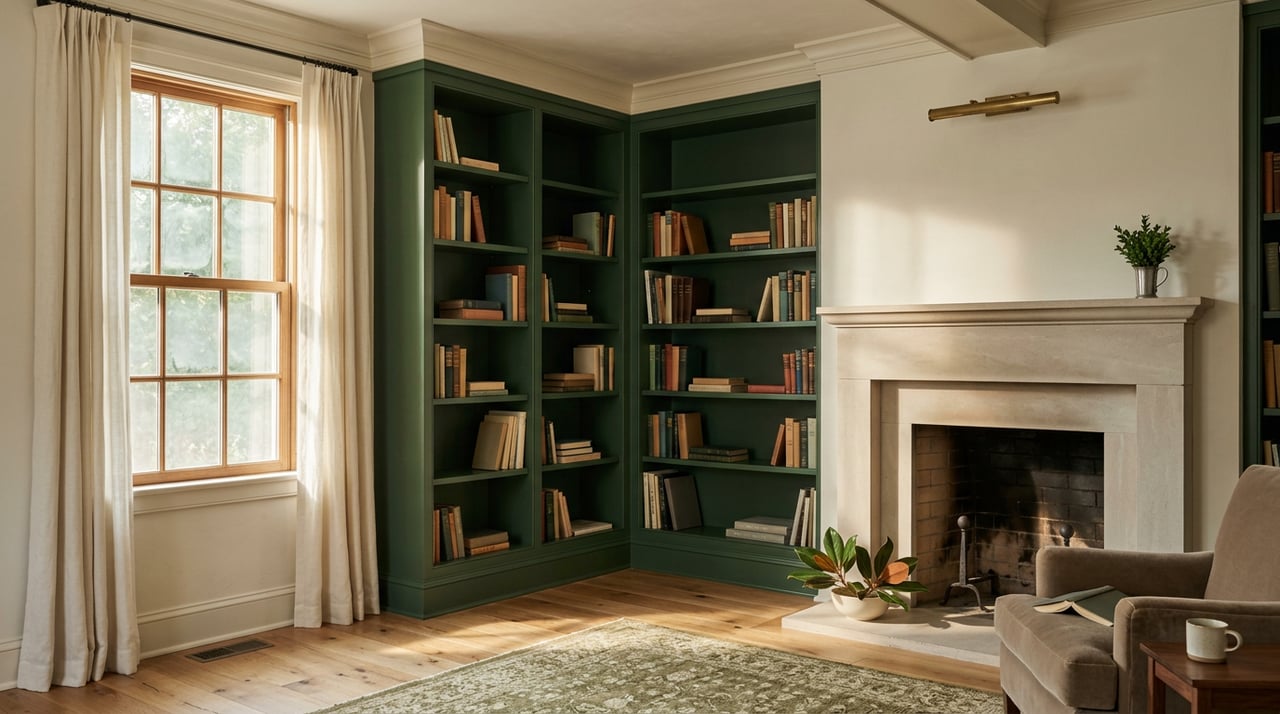
Windsor Farms Is Priced by a 1926 Document, Not the Richmond Market
August 6, 2026
August 6, 2026
Pull up the Redfin page for Windsor Farms and you will see a median that fell 36.7% year over year through April 2026, settling around $1.3 million. Pull up Homes.com and the trailing twelve months read $1,512,500 through June 2026, with an average sale near $1.8 million. Both are correct. Neither tells you what you are actually buying.
What you are buying, before you are buying a house, is a lot governed by a set of private covenants recorded in September 1926 and administered by Windsor Farms, Incorporated. That document, not the Richmond zoning code and not the MLS median, sets the ceiling on density, the floor on lot size, the design vocabulary of every exterior change, and the reason your renovation quote will not look like your friend's quote three miles east.
Every residential lot in Windsor Farms is subject to a recorded plat and a set of covenants tied to it. Covenant #2 is the one that shapes every future transaction:
No dwelling house, building, or structure of any nature whatsoever, shall be erected on any lot except in accordance with plans and specifications of the exterior construction thereof approved in writing by Windsor Farms, Incorporated.
That approval runs through the neighborhood's Architectural Review Committee. If the ARC and an owner disagree, the covenant sends the dispute to a three-person board: one member chosen by the owner, one by Windsor Farms, Inc., and a third architect chosen by those two. The decision is final.
This matters right now because Richmond is in the middle of rewriting a 1970s-era zoning code to allow more density citywide. Real estate attorney Preston Lloyd of Williams Mullen put the point plainly to The Richmonder in February 2026: covenants apply irrespective of zoning, because they are matters of private contract between original owners. In practical terms, if the city upzones the West End tomorrow, Windsor Farms will look the same the day after. Lots stay at a one-acre minimum. Houses stay single-family. One dwelling per lot.
If your investment thesis for a West End purchase includes upzoning-driven appreciation, this is the neighborhood where that thesis quietly dies. If your thesis is that architectural permanence is itself the asset, this is where it lives.
A neighborhood that adds no new supply, restricts subdivision, and turns over 15 to 25 single-family homes in a typical year is a statistical trap. One riverfront estate closing in April 2025 and not in April 2026 can move the trailing median more than any real change in value.
That is what the Redfin figure through April 2026 is doing. Compare it to the Homes.com twelve-month median of $1,512,500 through June 2026 and the picture steadies. Compete Score still reads 88 out of 100. Homes still sell in roughly 12 to 14 days. The average sale still clears list by about 11%.
For context, Mission Realty's July 2026 read on the city puts the citywide median at $402,500, up 4.3% year over year, at 21 days on market and 2.4 months of supply. Windsor Farms is transacting at roughly four times the citywide median, in half the time, out of an inventory pool that would not fill a suburban cul-de-sac. Treat any single-quarter median here as a mix report, not a value signal.
The covenants set the standards. The ARC enforces them. The result shows up in your contractor's bid. A kitchen and primary bath project that pencils at $300,000 in a comparable River Road West house often runs $400,000 to $500,000 inside Windsor Farms, because period-appropriate windows, slate roof repairs, matching brick, and traditional craftsmanship are what the neighborhood expects and what the ARC approves.
A rough sketch of where the delta lives:
| Scope item | Typical West End approach | Windsor Farms expectation |
|---|---|---|
| Roof replacement | Architectural asphalt shingle | Slate repair or in-kind slate replacement |
| Window replacement | Vinyl or clad wood, stock sizes | True divided-light wood, custom sizes |
| Exterior masonry | Patch and paint | Matching brick, matched mortar profile |
| Additions | Contractor-drawn permit set | Architect-drawn set, ARC pre-review |
| Fencing and color changes | Homeowner choice | ARC submittal required |
None of this is unreasonable. It is what preserves the streetscape that made you want the house in the first place. It is also a carrying cost that belongs in your offer math, not your after-close surprise pile.
Layer in the age of the housing stock. Most homes here are 75 to 95 years old. Slate roofs, original wood windows, and unrenovated pockets of knob-and-tube wiring or original plumbing are common. A pre-purchase inspection by a contractor experienced with pre-war Richmond construction is the version of due diligence that actually predicts your first five years of ownership.
Fifteen to twenty-five single-family sales a year, out of roughly 633 households, is a thin market by design. Long ownership tenures are common. Multi-generational holdings show up in the deed history. The children of long-tenure residents sometimes buy back into the neighborhood as adults, which quietly pulls houses off the market before they list.
That scarcity is why the Homes.com figure shows 14 days on market against a national average of 58, and why a Redfin-tracked sale-over-list of about 11% is not unusual. It is also why off-market activity matters more here than in almost any other Richmond submarket. The buyer pool includes a consistent share of principals from outside Virginia who specifically want architectural integrity and a discreet acquisition path. If you are only watching the MLS, you are watching a fraction of the actual transaction volume.
The adjacent gated Lockgreen subdivision, developed in the 1980s with its own recorded covenants, follows the same pattern at smaller scale.
Rather than treating this like a standard Richmond city purchase, sequence it like a private-community acquisition:
Does the ARC really review paint color and fencing? Yes. Exterior color changes, fence designs, additions, and outbuildings all run through review. The standards are reasonable, and the local trades know them, but the process is real and the timeline belongs in your project plan.
Will the citywide rezoning let me build a carriage house or ADU here? Not on the strength of zoning alone. The covenants restrict each lot to one dwelling for single-family residential use. Zoning changes do not override private covenants.
Is the recent Redfin median drop a buying signal? Treat it as a mix signal. With 15 to 25 sales in a typical year, one or two large estates trading or not trading swings the quarterly median far more than any change in underlying value. Cross-reference the trailing twelve months and the sale-to-list ratio before drawing a conclusion.
How is Lockgreen different? Lockgreen is a gated 58-home community adjacent to Windsor Farms with its own recorded covenants. Similar architectural expectations, different governing document. Read that one on its own terms.
Windsor Farms rewards buyers who understand that the covenant is the product. If you want to walk a few streets with someone who reads the plat before the listing sheet, Kelly Blanchard Real Estate works with design-aware buyers throughout the West End and can pair a Windsor Farms search with a realistic renovation budget from day one. When you are ready, ask us for a Free Home Valuation on your current home so the timing of a move-up purchase lines up with the house that finally lists.
Stay up to date on the latest real estate trends.
From your first consultation to closing day, we're committed to providing expert guidance, responsive communication, and a seamless experience.