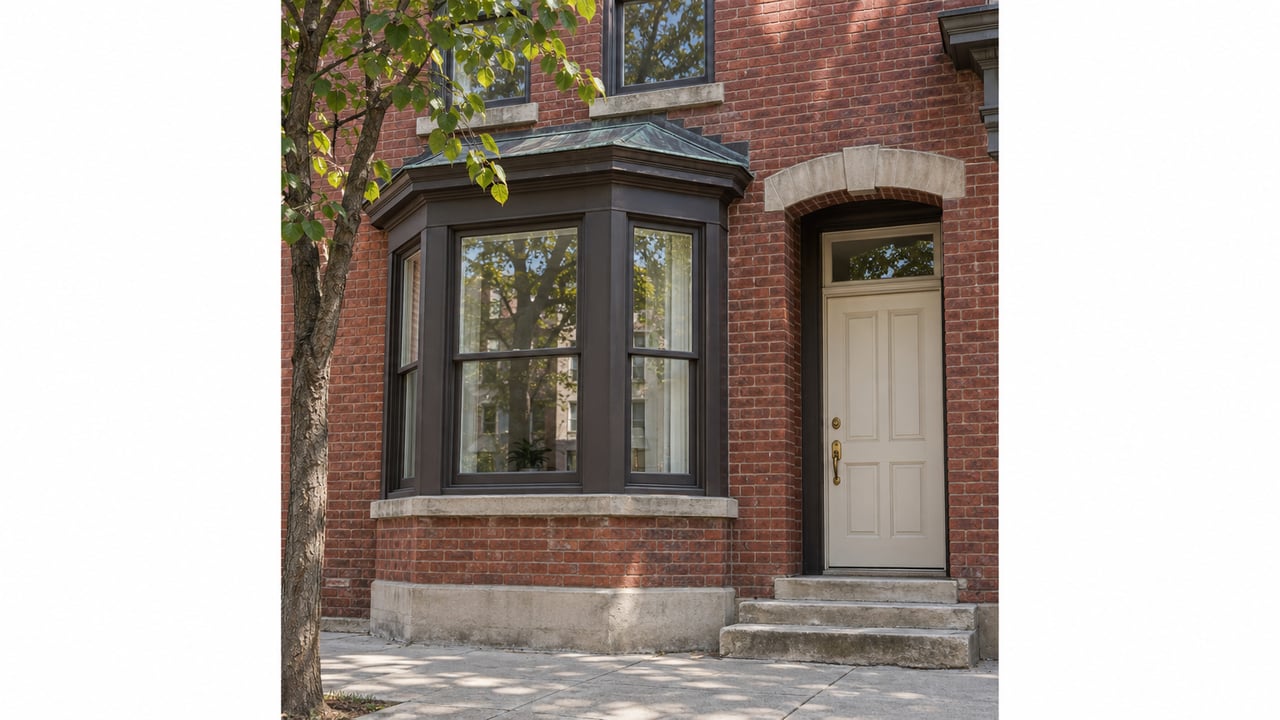
Fan District Historic Rules in Richmond: What Buyers Should Know
October 1, 2026
October 1, 2026
Say you're under contract on a rowhouse on the 1900 block of Floyd Avenue. The floor plan works, the price works, and you've already picked out the storm door. Then your contractor asks whether the house needs a Certificate of Appropriateness before that door goes in. You assumed yes, because everyone told you the Fan is a historic district. The real answer depends on which side of an invisible line your house sits on, and for most of the neighborhood, the answer is no.
That line is not a rumor or a technicality. It is the actual boundary between two very different kinds of "historic" in Richmond, and it is easy to miss because both kinds share the same name on real estate listings and the same plaques on the buildings.
Richmond's Commission of Architectural Review, established by City Council in 1957, is the body that reviews exterior changes to buildings inside the city's Old and Historic Districts and issues the Certificates of Appropriateness that homeowners need before repainting, replacing windows or doors, changing roofing material, or putting up a fence taller than four feet in a front yard. It is a real board with real authority: nine members, six citizens-at-large and three drawn from nominee lists submitted by the AIA Richmond chapter, the Historic Richmond Foundation, and the Richmond Association of REALTORS. At least one member has to live inside a City Old and Historic District. The commission meets the fourth Tuesday of the month, except in December when it moves to the third Tuesday.
Here is the part that surprises most buyers. According to the Fan District Association's own historic preservation page, only Monument Avenue, West Grace Street, and West Franklin Street carry City Old and Historic District status, meaning only those blocks fall under CAR review. The rest of the Fan, which the FDA describes as the vast majority of the neighborhood, is not subject to CAR review for routine exterior changes like a repainted door or replacement windows; the Fan Overlay District Guidelines address demolition and new construction.
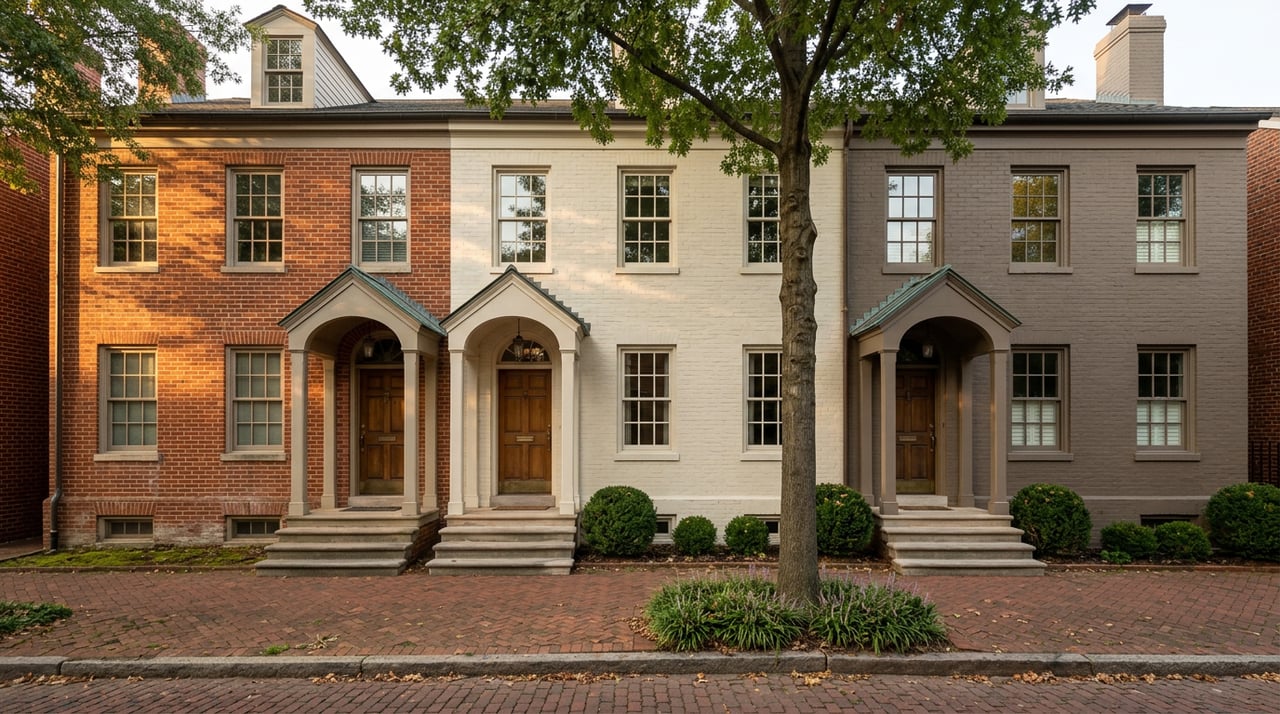
Two rowhouses can sit a block apart, share the same Italianate cornice details, the same age, the same builder's hand, and answer to entirely different rules. One needs a certificate before its owner can swap a window sash. The other doesn't need to ask anyone before swapping a window sash.
The confusion starts with the plaques. Much of the Fan carries a National Register of Historic Places designation as the Fan Area Historic District, an 85-block area added to the register in 1985. Monument Avenue has its own separate listing, the Monument Avenue Historic District, on both the Virginia Landmarks Register and the National Register.
Historic Richmond, the nonprofit that tracks these designations locally, draws the distinction plainly: the National Register is a federal designation that carries no restrictions on the property, while City Old and Historic Districts are local designations that do carry restrictions on exterior alterations and new construction. It did not open the door to city oversight of what an owner does with that same house.
So a National Register plaque on a Grove Avenue rowhouse is a credential, not a leash. It cannot stop a buyer from vinyl-siding over the original weatherboard, and no city commission will ask to see the paint chip first, unless that rowhouse happens to sit on Monument, West Grace, or West Franklin.
| Monument Ave, W. Grace St, W. Franklin St | The rest of the Fan | |
|---|---|---|
| Reviewing body | Commission of Architectural Review | No design review board |
| Paint, windows, doors, roofing | Certificate of Appropriateness required | No city sign-off required |
| Review cycle | Fourth Tuesday monthly, third Tuesday in December | None |
| National Register status | Listed (Monument Avenue Historic District) | Listed as part of the Fan Area Historic District, 1985 |
| Design review effect | Binding design review | No binding design review |
Fan residents noticed the gap well before this year. In early 2016, the Fan District Association surveyed residents about interest in historic preservation measures beyond what the National Register provided, and found strong support for protecting existing structures from demolition and keeping new construction compatible with the block. A volunteer group of design professionals, architectural preservationists, and attorneys studied how other cities handled similar gaps and drafted what became the Fan Overlay District Guidelines.
Those guidelines only reach demolition and new construction. They do not touch the day-to-day exterior work, the window swap, the new coat of paint, the replaced porch rail, that CAR would review on Monument, Grace, or Franklin. It is a real tool, and it says something about how seriously the neighborhood takes its own character, but it was never built to be a substitute for design review. It fills part of the gap. It does not close it.
None of this is frozen. Richmond's zoning ordinance dates to the mid-1970s, and the city is currently in the middle of what the Fan District Association calls a Code Refresh, a full rewrite tied to the Richmond 300 Master Plan that can take up to three years to complete and will remap zoning categories for every parcel in the city.
Separately, in November 2025, Richmond's Planning Commission advanced a citywide Cultural Heritage Stewardship Plan with revisions, according to Richmond BizSense's coverage of that meeting. The plan drew pointed criticism at that hearing: some argued it would create redundancy with the existing Old and Historic Districts that already require CAR approval for exterior work, and the city's own Housing and Community Development department sent a memo warning that the plan, if approved as written, would have unintended consequences. Critics also flagged that the plan lacked defined incentives for reviving a rehab tax abatement program the city discontinued six years earlier over concerns about inequities in its results. As of that November vote, the plan was still moving through revisions rather than settled into final form.
Read together, these two processes mean the current patchwork, protected streets versus everywhere else, is being actively debated at the same time it governs real transactions. A buyer closing on a Grove Avenue house this fall is operating under today's rules. A buyer closing in two or three years, once the Code Refresh lands, might not be.
The market itself doesn't sort by regulatory status, and that's worth sitting with. Over the three months ending in May 2026, Fan home prices were up 5.2% year over year with a median sale price of $750,000, according to Redfin, and homes were taking an average of 16 days to sell compared to 12 days the year before. By September 2026, Homes.com listed the Fan's median home price at $657,000 with an average sale price of $739,620, and townhouses on the market ranging from $585,000 to $1,125,000.
That spread from $585,000 to $1.125 million tells you almost nothing about which regulatory bucket a given house falls into. A $1.1 million rowhouse on Grove Avenue can be entirely free of CAR review. A $600,000 house on Monument Avenue needs a Certificate of Appropriateness before its owner touches the exterior. Price tracks size, condition, and block desirability. It does not track design authority. That has to be checked address by address, and it's a five-minute question, not a mystery, once you know to ask it.
The slightly longer days on market this year, 16 versus 12 by Redfin's count, actually works in a buyer's favor here. It means there's room to build this specific check into your due diligence before you waive a contingency: confirm whether your address sits on Monument Avenue, West Grace Street, or West Franklin Street, or anywhere else in the Fan, before you budget a renovation timeline around a monthly CAR meeting that might not apply to you at all.
It won't restrict what you're allowed to do to the exterior unless your address also falls inside a City Old and Historic District.
Routine changes like paint, windows, and doors aren't reviewed by CAR outside those three areas. Demolition and new construction are a different matter, since the Fan Overlay District Guidelines the neighborhood association wrote do address those specifically.
It's worth knowing that both a citywide zoning rewrite and a separate preservation plan were actively moving through city process as of late 2025 and into 2026. Neither has settled into final form as of this writing, which is exactly why it's worth confirming current status at the time you close, not relying on what a neighbor told you a few years ago.
If you're weighing a Fan District purchase and want to know exactly which rules apply to a specific address before you write the offer, not after, that's a conversation worth having early. Kelly Blanchard Real Estate can walk through it with you, street by street, before the contract gets in the way of the answer.
This article is general information, not legal, tax or financial advice. Consult a qualified professional about your situation.
Stay up to date on the latest real estate trends.
From your first consultation to closing day, we're committed to providing expert guidance, responsive communication, and a seamless experience.